
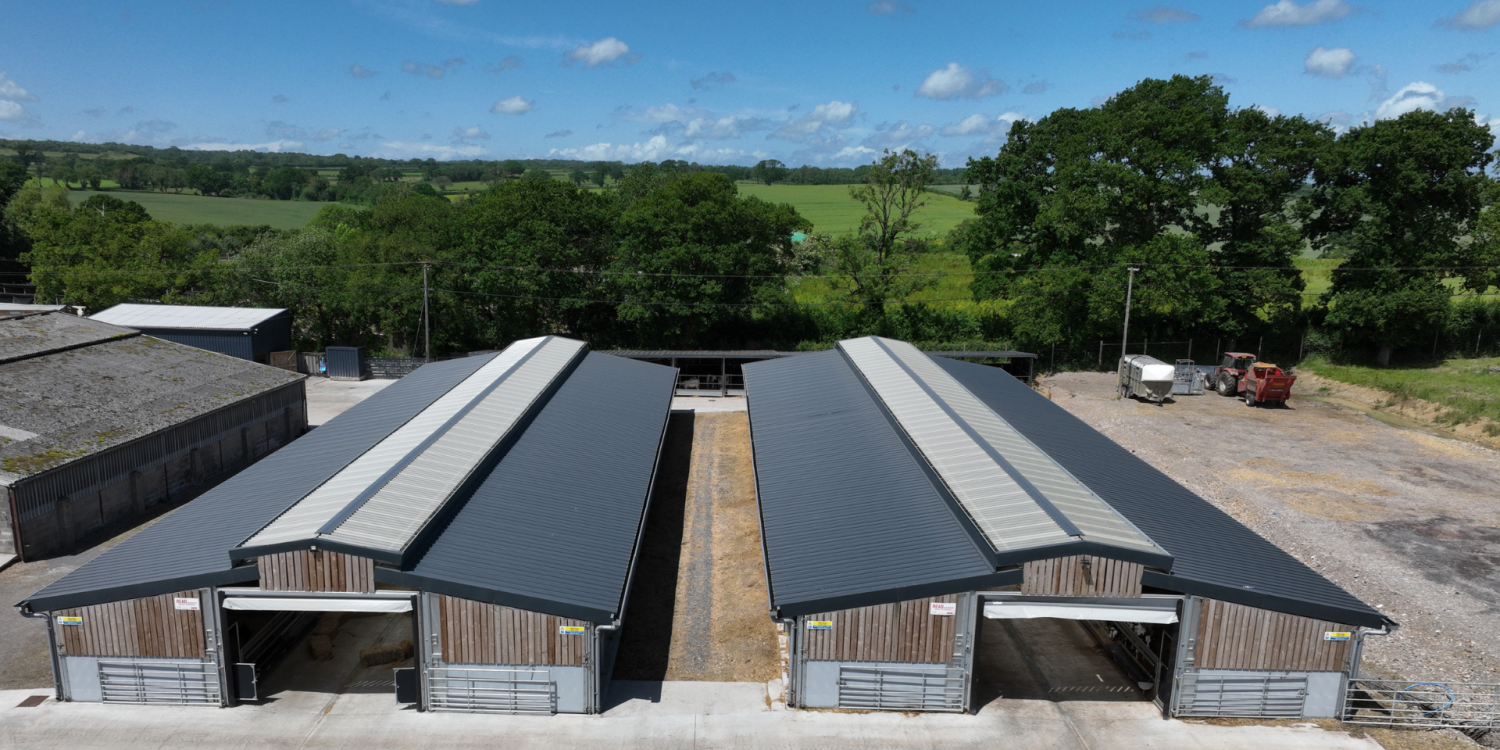
Long Lane Development Farm: Did You Know?
How research, evidence and integrity are helping shape the future of commercial calf rearing
Improving calf rearing requires more than good ideas. It requires evidence.
How can housing better support calf health? Can nutrition be made more efficient and sustainable? How can antibiotic use be reduced responsibly? And how do we know whether new products or management practices will work under commercial farming conditions?
These are exactly the kinds of questions being explored at Long Lane Development Farm, Buitelaar Group's dedicated research, development and demonstration farm in Somerset.
Established in 2019, Long Lane provides a commercial environment where Buitelaar and its partners can trial products, practices and technologies, collect meaningful data and turn those findings into practical knowledge for farmers and the wider supply chain.
This approach also reflects one of Buitelaar Group's core values: integrity.
For us, integrity means being prepared to test assumptions, measure outcomes and build recommendations around evidence. Long Lane gives us the environment to do exactly that.
What is Long Lane Development Farm and why was it created?
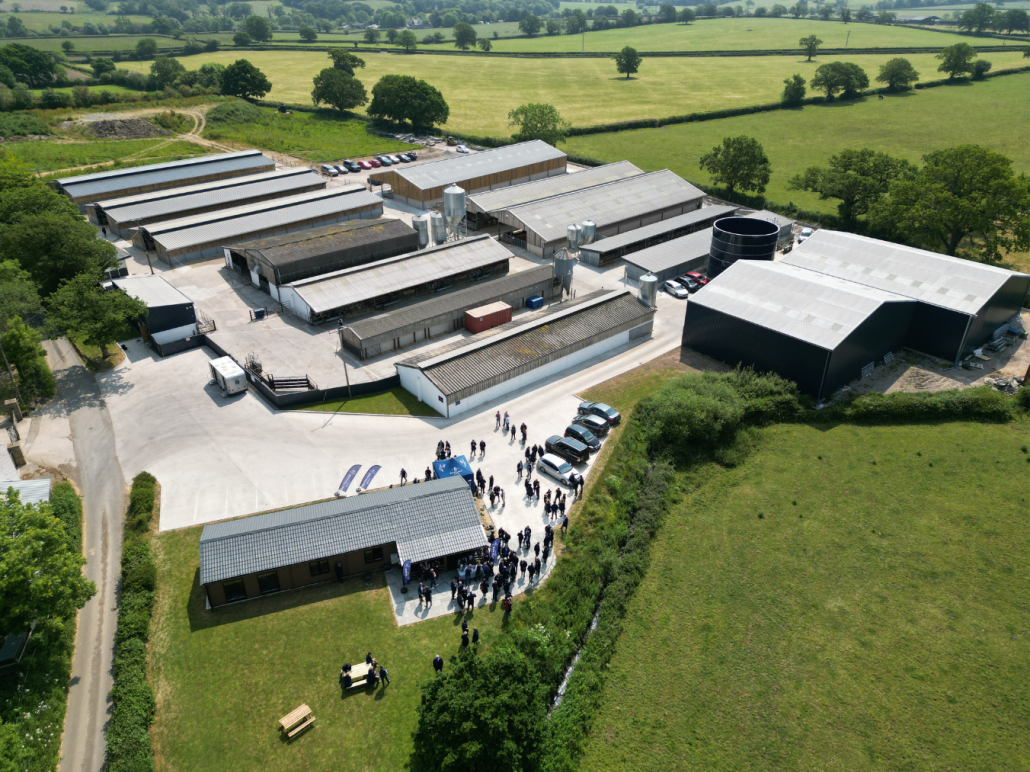
Long Lane Development Farm is Buitelaar Group's dedicated calf-rearing research and development facility in Somerset.
It was created to provide a commercial-scale environment in which different approaches to calf health, nutrition, housing, welfare and management could be properly assessed.
Rather than relying solely on trials being conducted abroad, we do our own trials to make sure the results suit our context. Long Lane allows ideas to be evaluated in conditions that reflect the realities of commercial calf rearing.
The farm also acts as a demonstration and teaching facility, supporting farmer education, industry visits, open days and wider knowledge exchange.
Ultimately, its purpose is to help answer a simple question: What genuinely works in practice?
How does Long Lane support research into commercial calf rearing?
Commercial relevance is central to the way Long Lane operates.
Trials take place within an active calf-rearing environment, allowing researchers and the Buitelaar technical team to assess how changes may influence areas including animal health, growth, feed efficiency, welfare and farm management.
The farm is equipped to capture data around areas such as feed and water consumption, temperature and animal performance, giving the team the ability to compare different approaches using measurable evidence.
This creates an important link between research and practical farming.
A concept may work well in theory, but Long Lane helps us understand whether it can also work consistently, practically and commercially.
What types of trials are carried out at Long Lane?
Research at Long Lane broadly focuses on three interconnected areas:
- Animal health and welfare
Work has explored areas including disease prevention, vaccination strategies, antibiotic reduction, colostrum and immunity, animal enrichment and different approaches to routine calf management.
- Nutrition and feed efficiency
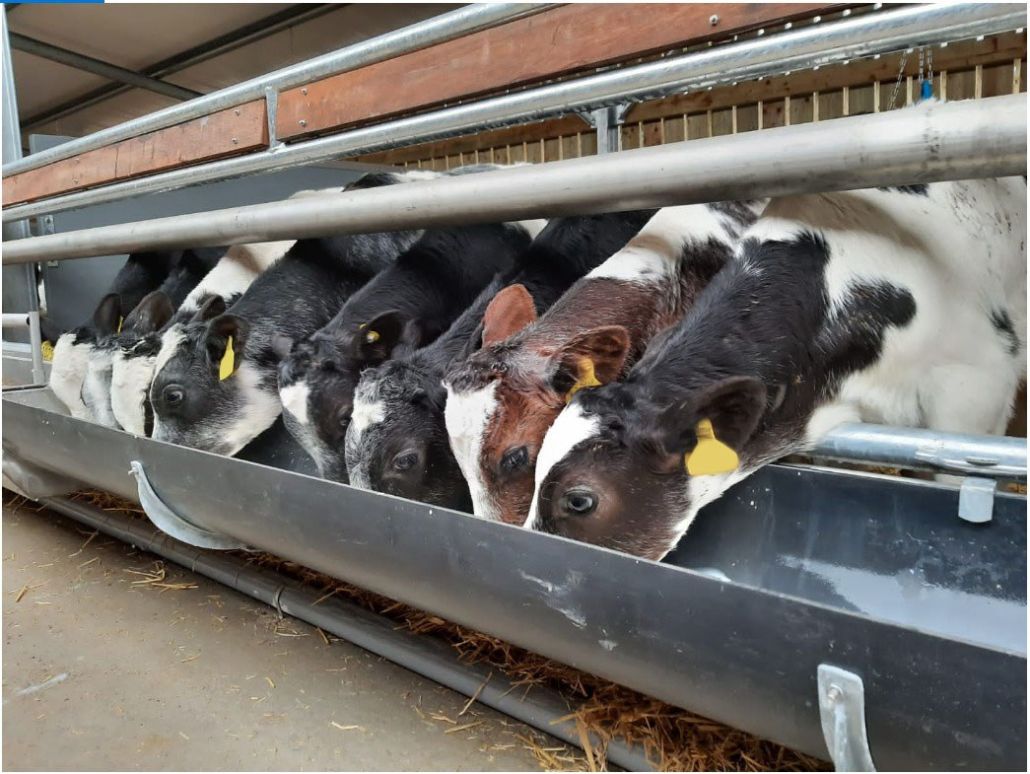
Trials have investigated milk powders, different feeding systems, protein sources, feed intake, Omega-3 inclusion and alternatives to soya.
Soya has been removed from the Long Lane farming system since 2020, with research supporting Buitelaar's wider ambition to identify practical, sustainable alternatives within calf production.
- Housing and environment
The physical environment in which calves are reared is another major research area. Trials have considered factors such as housing design, ventilation, bedding and the relationship between the calf's environment, health, performance and antibiotic requirements.
Importantly, these areas are not considered in isolation. Nutrition, health, genetics, environment and management all interact, and Long Lane provides an opportunity to understand those relationships more clearly.
How are trials selected and governed?
Research at Long Lane is intended to address genuine challenges and opportunities within commercial calf production.
A dedicated R&D Trials Committee has been established to support the development and oversight of research undertaken at the farm. Previous trials have also involved external veterinary expertise, including supporting in research study design and veterinary expertise with Synergy Farm Health.
This structure is important because credible research requires more than collecting numbers.
Trials need clear objectives, appropriate comparison, consistent measurement and proper technical scrutiny if the findings are going to inform decisions elsewhere in the supply chain.
What have we learnt about calf health, housing and nutrition?
One of the clearest lessons from Long Lane has been that successful calf rearing depends on looking at the whole system.
Health cannot be separated from environment. Nutrition cannot be considered independently of performance. And improving efficiency should not come at the expense of animal welfare.
Previous work at Long Lane has demonstrated measurable reductions in antibiotic use and has helped develop Buitelaar's understanding of how housing, health protocols and nutrition can influence calf performance.
The purpose, however, is not simply to produce individual headline results.
Each trial contributes to a wider evidence base that helps Buitelaar continually refine its approach to calf rearing.
That could mean improving a building design, changing a feeding recommendation, assessing a new health product or identifying where further research is required.
What research is currently taking place at Long Lane?
Long Lane is not a completed research project. It is an active development farm. Trials continue to evolve in response to the challenges facing calf producers and the wider food supply chain.
Current and recent areas of interest include animal health, nutrition, feed efficiency, housing and environmental performance, alongside the assessment of new products and technologies with potential applications in commercial cattle production.
The wider Buitelaar research programme has also explored sustainable feed alternatives and products with the potential to reduce the environmental impact of cattle production.
This ongoing programme is what makes Long Lane particularly valuable. As new challenges emerge, the farm gives Buitelaar and its research partners somewhere to investigate them in a real-world setting.
Who does Buitelaar work with on research at Long Lane?
Collaboration is an important part of the Long Lane model.
Buitelaar works with veterinary professionals, nutrition and animal-health specialists, suppliers and other industry partners to explore new approaches and generate commercially relevant evidence.
The farm has previously supported work with external veterinary expertise and pharmaceutical companies as part of its research and development programme.
Bringing different areas of expertise together helps ensure research considers both the science behind an idea and the practicalities of applying it on farm. Long Lane therefore provides more than a research facility. It provides a place where different parts of the industry can collaborate around shared challenges.
How are findings from Long Lane used across the wider supply chain?
Research is only valuable if the knowledge can be put into practice.
Findings from Long Lane can help inform Buitelaar's approach to areas including technical advice, calf-rearing protocols, nutrition, animal health and housing. They can also contribute to conversations with farmers, customers, suppliers and other industry stakeholders.
Knowledge exchange is therefore a fundamental part of the Long Lane model. Through open days, farm visits, demonstrations and direct engagement with producers, the objective is to take useful learning beyond the development farm itself.
This aligns with Buitelaar Group's wider commitment to developing and sharing agricultural knowledge, helping farmers and partners make more informed decisions.
Why is integrity important to research at Long Lane?
Integrity in agricultural research means being willing to follow the evidence. It means not assuming that a new product, technology or way of working is better simply because it is new. It means measuring outcomes, challenging our thinking and being transparent about what the results tell us. Long Lane gives Buitelaar Group a dedicated environment in which to do that.
As agriculture responds to pressures around animal health, environmental impact, production efficiency and food security, credible progress will increasingly depend on practical evidence.
Through continued research, collaboration and knowledge exchange, Long Lane Development Farm helps turn that evidence into action – supporting better-informed decisions across the supply chain.
Connecting farmer and consumer through research, knowledge and integrity.
